 RipCompass

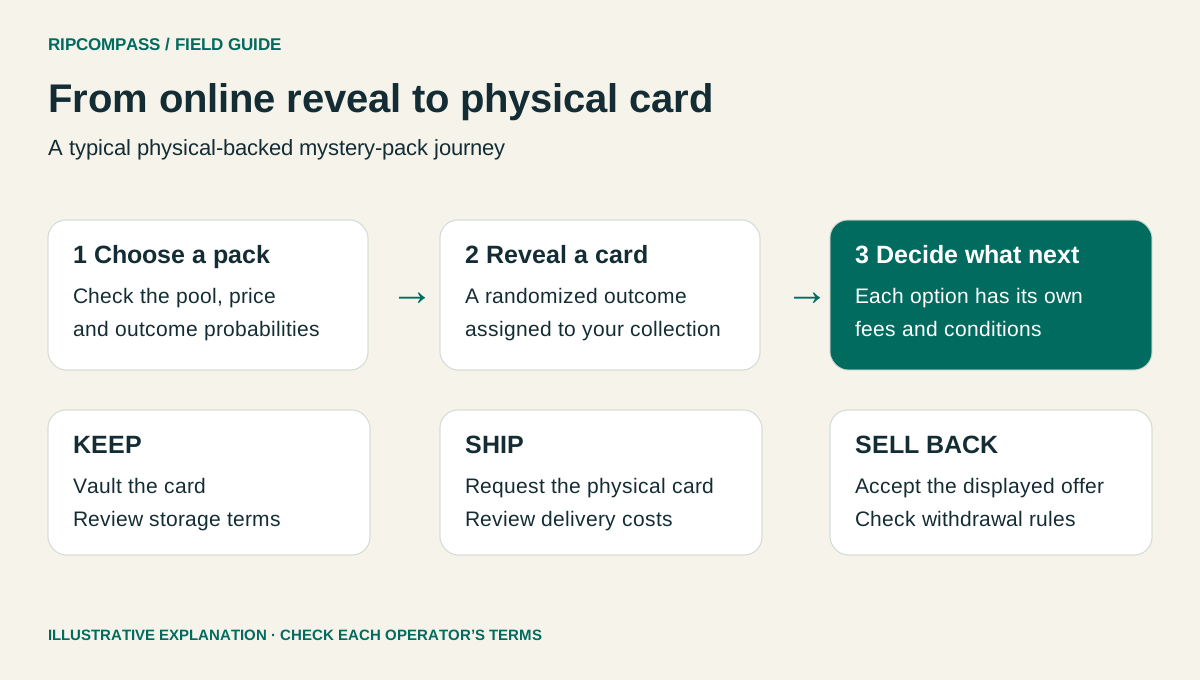
A digital reveal can represent a physical card
On a physical-backed ripping platform, you purchase a randomized pack online and reveal an assigned collectible. The operator may hold the physical card in a vault until you request shipment. The screen is the reveal interface; the object you ultimately want may be a real encapsulated card. Always check what the specific product actually conveys.
Do not assume every digital pack works this way. Some products contain digital-only items. Others represent a physical item through a token. A useful product description explains who owns the physical card, where it is held and how you can redeem it.
For a platform example, read our Courtyard review and its custody and redemption details.
Instant packs, live breaks and sealed retail packs
An instant pack typically reveals a pre-defined randomized outcome through a website. A live break involves a host opening cards on a stream, with ownership determined by the particular purchase rules. Buying a team or a slot is different from buying every card in a sealed box.
A manufacturer-sealed retail pack is different again from a repack assembled by a platform. The card mix, valuation and probabilities may be set by different parties. Compare like with like, and read the exact allocation rules before buying.
The three decisions after a reveal
Keep: leave the card in your collection or vault. Check storage fees, insurance limits and what happens if the business stops operating. Ship: request the physical card. Check delivery fees, processing time, destination eligibility and the procedure for damage. Sell back: accept an offer from the platform. Check how the amount is calculated and whether proceeds can be withdrawn.
A marketplace sale adds another possibility, but an asking price is not a completed sale. You may need to wait for a buyer, lower the price or pay transaction costs. Treat convenience and guaranteed execution as separate features.
Before accepting an offer, understand how buyback rates work and what the credited balance represents.
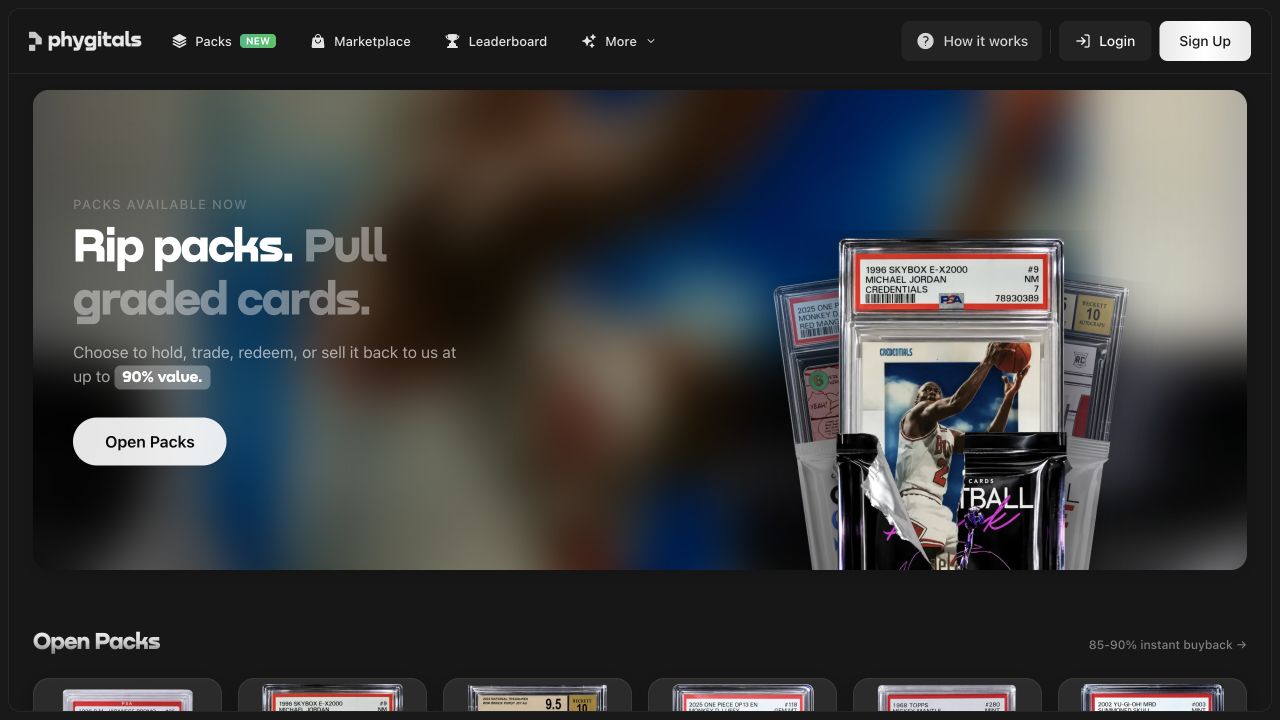
Phygitals puts the post-reveal choices on its homepage: hold, trade, redeem or sell back. Use those choices to decide which fees and terms to compare before opening.
Screenshot captured September 14, 2026. View official source ↗ · Select the image to enlarge.
A $25 pack: follow the card and the money
Imagine paying $25 for one random graded card. The platform assigns the revealed card a $20 value and offers 85% buyback. Accepting produces $17 in platform proceeds: $20 × 0.85. That is $8 below the purchase price before any withdrawal charge. These are invented figures, not the result of an opening.
Keeping the same card answers a different question. If a hypothetical shipment costs $8, your total outlay becomes $33 before any tax or other fees. Compare that with the delivered price of buying the exact card directly. You cannot both keep the card and count a completed sale of it as money recovered.
A sensible first-session checklist
First confirm that your actual country, age and payment method are supported. Next read the pool, probabilities and total checkout price. Decide in advance whether you want a card for your collection or merely the reveal experience. If you want one particular card, compare its direct-purchase price.
Use a fixed collecting budget you are comfortable spending. Save the pack description and outcome. Check the promised redemption process on a small scale before making larger commitments. A visually exciting opening does not establish the value of its contents.
Where to go next
Use our comparison to find the source documents for each operator. Then read the guide to buyback percentages if you expect to sell, or the shipping guide if your goal is the slab in your hands. The right comparison depends on that decision.
See the workflow on real platforms
Our September 17 comparison follows the same decisions across Courtyard and Phygitals: choose a product, understand the valuation, then decide whether to keep, sell or ship. Our Phygitals pack series supplies dated screenshots rather than treating a catalog image as proof of an outcome.
About this guide
Educational explanations and illustrative calculations from RipCompass team. Examples are not observed pack results. Operator-specific terms are linked in our reviews.
Published September 14, 2026. Suggest a correction.
Put the details side by side
Explore the card ripping site comparison or read our pre-purchase checklist.