 RipCompass

A vault stores the card; your account records the claim
A trading-card vault receives a physical card, records it in an account and holds it until you sell it or request delivery. Buying a vaulted card can transfer the account record without moving the slab. Shipping is a separate step: seeing a card in your collection does not mean it is already on its way to you.
That distinction matters when comparing a marketplace, a consignment warehouse and a pack platform. Start with the action you need: store cards you already own, buy and resell within one marketplace, or take physical delivery of a pack pull.
Check whether your exact cards qualify
Before mailing anything, check accepted grading companies, slab sizes, minimum values and raw-card rules. PSA Vault accepts supported graded cards rather than raw cards. Alt supports raw-card storage but does not offer raw-card marketplace sales. COMC processes raw and graded cards through its consignment service; its fee and processing model is different.
For example, a box containing twenty raw Pokémon singles and two PSA slabs is not one standard submission everywhere. Separate it into eligible groups and price each group before choosing an address.
Intake is a second clock after the parcel arrives
Keep a submission inventory with card names, certification numbers, photographs and your shipment tracking. Follow the provider’s current packing and submission instructions. Carrier delivery confirms arrival at a facility; it does not confirm that every card has been checked and assigned to your account.
Wait for the itemized account record and compare it with your inventory. If a card is missing or incorrectly identified, raise that discrepancy while the shipment details and photographs are readily available. Ask for an intake estimate before sending a collection you plan to sell soon.
Understand what ownership and insurance actually cover
Read the custody terms: who operates the facility, how ownership is recorded, which events are covered and how a loss is valued. An insurance statement does not tell you whether the relevant value is your purchase price, a market estimate or another limit.
If a service uses a digital token to represent a vaulted item, check the physical redemption conditions and the relationship between that token and the underlying card. Keep account security and recovery arrangements in place; a physical vault does not remove the risk of losing account access.
Choose between keeping, selling and withdrawing
These are three different cost paths. Keeping may incur storage or security fees. Selling may incur a commission and a later cash-out fee. Withdrawing can incur a per-card or percentage charge plus delivery costs. “Free storage” answers only one part of that decision.
Consider a collector who buys a slab intending to keep it at home. The relevant comparison is the purchase price plus the entire withdrawal and shipping bill. A seller who intends to leave the card in the same marketplace should instead compare expected net sale proceeds.
Request delivery with enough time for processing
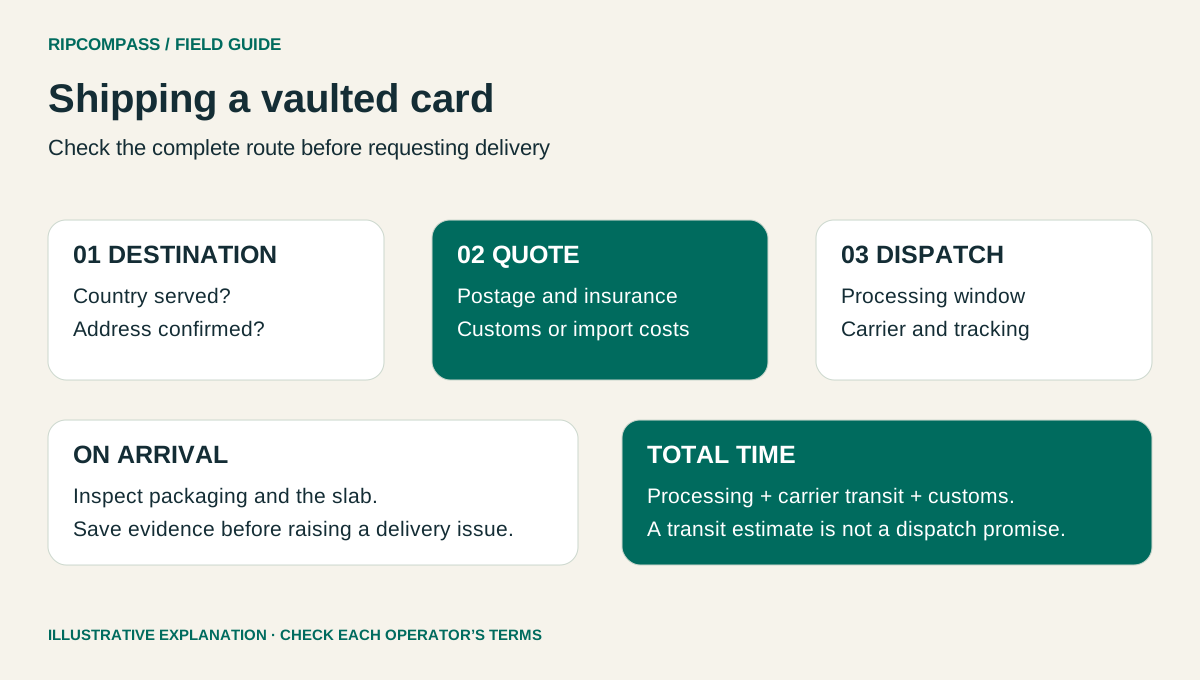
Withdrawal processing happens before carrier transit. Customs and destination handling can add another stage to an international shipment. Ask separately when the provider expects to dispatch and what carrier service the quote includes.
European collectors should also confirm their exact destination and selling eligibility. A service that accepts an overseas customer or publishes international shipping prices does not necessarily offer every account feature in that country.
About this guide
Educational explanations and illustrative calculations from RipCompass team. Fee examples apply the linked published rates; they are not individual checkout quotes. Operator-specific terms are linked in our reviews.
Published September 23, 2026. Suggest a correction.
Put the details side by side
Explore the card vault comparison or use the vaulted-card shipping checklist.